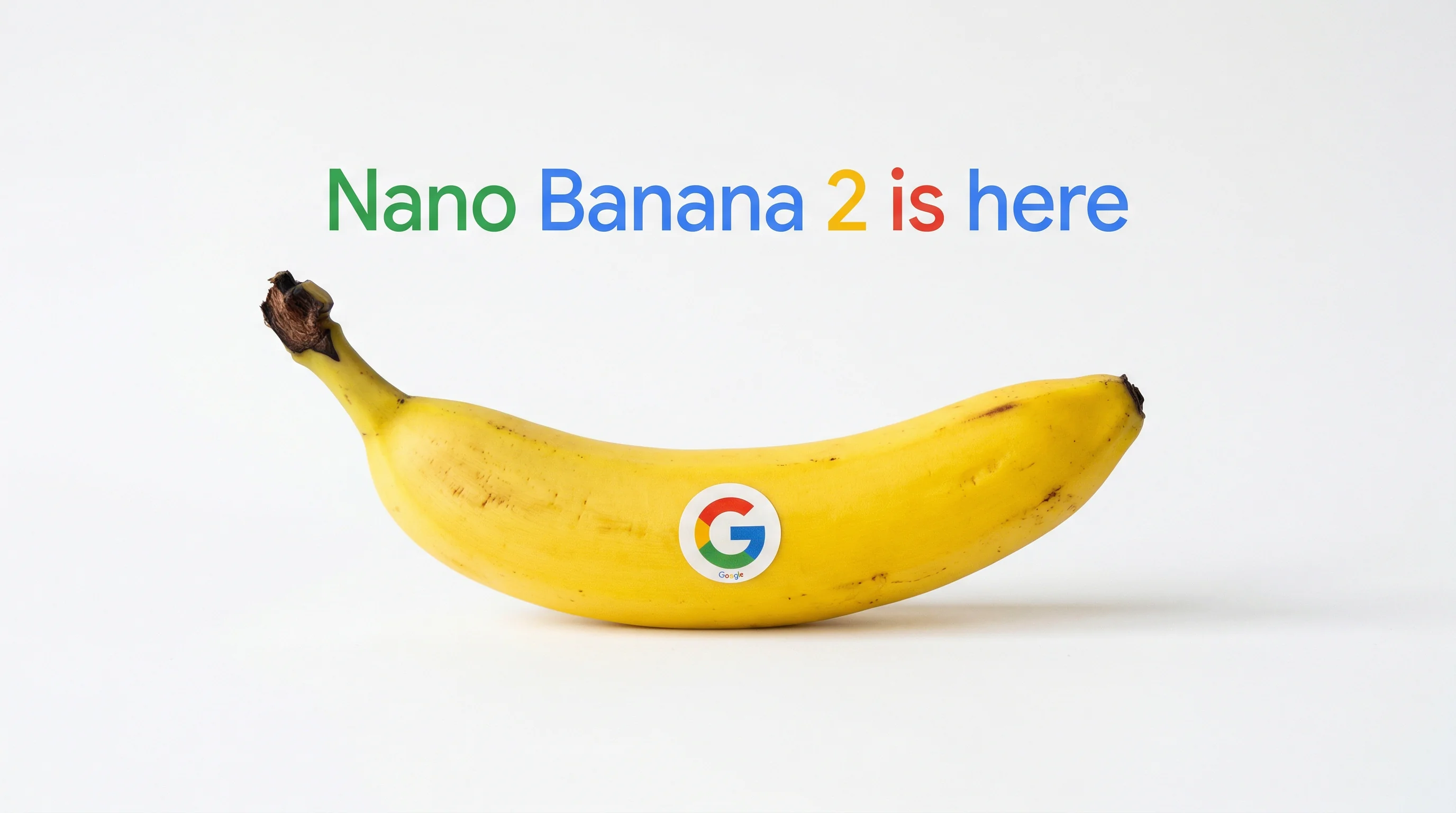
Google's Nano Banana 2 — the image model behind Gemini 3 Pro Image — has quickly become one of the most talked-about generative tools of 2026. But beyond the hype, what real value does it deliver for marketers, designers, and ad creators? This guide breaks down what Nano Banana 2 actually changes and whether it's worth building into your creative workflow.
What Is Nano Banana 2?
Nano Banana 2 (also marketed as Nano Banana Pro) is Google's latest AI image generation and editing model, built on the Gemini 3 family. Unlike earlier generators that simply matched prompts to pixels, it applies deep reasoning to understand a prompt before drawing a single shape. The result is imagery that looks deliberate rather than accidental — closer to a brief handed to a studio than a slot-machine pull.
Where the original Nano Banana prioritized speed at roughly 1K resolution, Nano Banana 2 raises the ceiling to 1K, 2K, and full 4K output, with aspect ratios spanning square, portrait, landscape, and ultrawide. That alone moves it from "social thumbnail" territory into print-ready and large-format work.
The Core Value: What Actually Improved
1. Text rendering that finally works
For years, the Achilles' heel of AI image tools was text. Logos came out garbled, captions read like alien runes, and any poster with words needed a designer to fix it afterward. Nano Banana 2 renders legible, correctly spelled text directly inside images — making it genuinely useful for ad banners, social posts, infographics, and packaging mockups.
2. Multi-character and brand consistency
The model holds a subject's identity steady across multiple generations. You can place the same character, product, or mascot into different scenes without it morphing into someone — or something — else. For brand work, that consistency is the difference between a one-off image and a reusable visual system.
3. Real-world knowledge and grounding
Nano Banana 2 can draw on real-time information and reference images, which sharpens accuracy for use cases like localized marketing, educational visuals, and travel content. Instead of inventing details, it grounds them — a meaningful upgrade when factual correctness matters.
4. Studio-quality output at 4K
With native high-resolution rendering, creators get ultra-sharp visuals suitable for print, billboards, and hero sections — not just feeds. Refined lighting, realistic materials, and clean composition come out of the box rather than requiring heavy post-processing.
The headline shift isn't "prettier pictures." It's that Nano Banana 2 reduces the number of human fix-up steps between a prompt and a publishable asset.
Why It Matters for Ad Creatives
If you produce advertising at scale, the value compounds in a few specific ways:
- Faster iteration: Generate dozens of on-brand concepts in minutes instead of waiting on a design queue.
- Lower production cost: Usable text-in-image output cuts the manual retouching that used to eat hours per campaign.
- Consistent brand assets: Character and style consistency means your visuals stay recognizable across an entire funnel.
- Format flexibility: One concept can be regenerated cleanly for Stories, wide presentation backdrops, and print without redrawing from scratch.
The Trade-offs to Know
No tool is free of caveats, and being honest about them protects your workflow:
- Watermarking: Every image carries an invisible SynthID watermark identifying it as AI-generated.
- Access and billing: You can try it free through the Gemini app, but programmatic API access requires billing setup.
- Model naming confusion: "Nano Banana 2," "Nano Banana Pro," and the underlying "Gemini 3 Pro Image" all refer to the same lineage — but API model IDs differ from the app experience, so confirm exactly which one you're calling.
- Review still required: Reasoning helps, but human review remains essential for claims, compliance, and brand-safety checks.
Is Nano Banana 2 Worth It?
For anyone producing visual content at volume — especially ad creatives, social media managers, and marketing teams — the answer is a clear yes. The combination of accurate text rendering, 4K fidelity, and subject consistency removes the exact bottlenecks that made earlier AI image tools more demo than workhorse. The value isn't novelty; it's the time and cost it quietly removes from your pipeline.
The smartest approach is to treat Nano Banana 2 as a creative accelerator inside a structured workflow: generate fast, keep a human in the loop for final review, and lean on its consistency to build a library of reusable, on-brand assets.
Frequently Asked Questions
What is the difference between Nano Banana and Nano Banana 2?
Nano Banana 2 (Nano Banana Pro) is the newer model built on Gemini 3 Pro Image. It adds higher resolution (up to 4K), dramatically better text rendering, stronger multi-character consistency, and real-world grounding compared to the original speed-focused Nano Banana.
Can Nano Banana 2 generate text inside images correctly?
Yes. Accurate, legible text rendering is one of its standout upgrades, which makes it practical for ad banners, posters, and infographics that earlier models struggled with.
Does Nano Banana 2 support 4K images?
It supports 1K, 2K, and full 4K resolution across multiple aspect ratios, making it suitable for print and large-format work, not just social feeds.
Comments (0)
Be the first to leave a comment.